
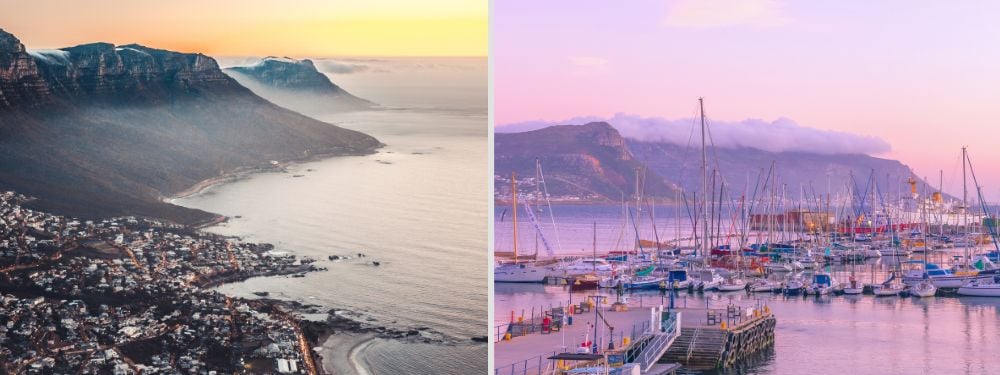
I have lived in Cape Town, South Africa, my whole life, and that’s why I’d love to tell you everything you need to know when visiting this place and its surrounding areas in October.
Personally, my wife and I love it here during this month, but read on for tips on everything you should know about:
- How is the weather in October?
- What do you need to pack?
- What should you wear?
- Best things to do in October (mountains, beaches,…)
Tours, Hotels, Guides / October Last Minute Deals:
🎟️ The Best Cape Town Activities & Tours
All of the links above open in a new tab. They are incredibly useful for your Cape Town trip.
Nestled amidst mountains in a unique floral kingdom flanked by two seas, the beauty of Cape Town’s natural surroundings is legendary.
And, of course, Cape Town is also a vibrant modern capital, offering a full range of world-class entertainment, adventure, accommodation, and access to further travel options.
Is October a Good Time to Visit Cape Town?
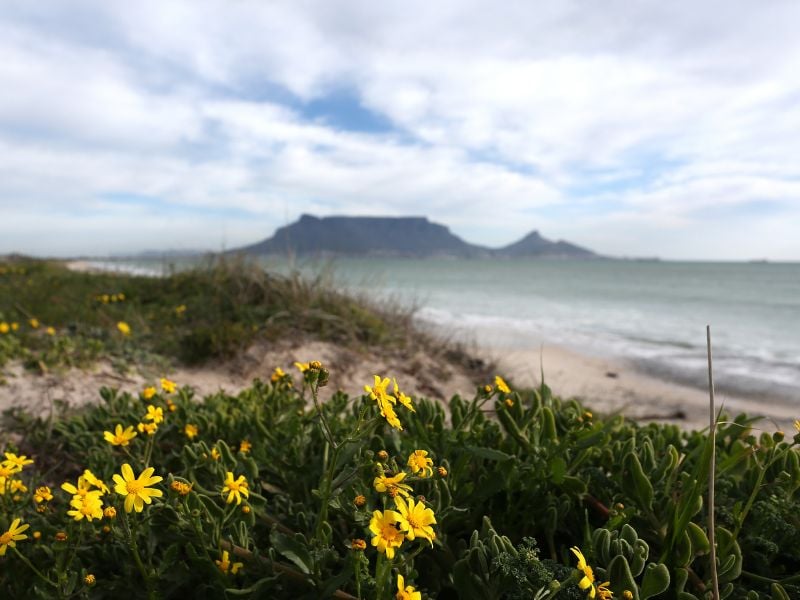
In one of his best-known poems, renowned Cape Poet C Loius Leipoldt declares, ‘October is the loveliest month’.
October is spring in Cape Town. The sun shines most of the time without becoming too hot for comfort. It is a month to enjoy beaches, ocean views, and hiking trails, to experience sea and mountain adventures, or follow the wine routes.
Nights are cool but not cold, and the city’s nighttime fun, dining, and entertainment are swinging back to life.
As a bonus, peak season only begins in November. So, in October, overseas tourist crowds are still modest; cheaper accommodation and flights remain available.
Seasonal highlights in October include the springtime color at Kirstenbosch Botanical Gardens, The Franschhoek Art Festival, the Cape Town international kite festival, and the Hillcrest Season of Sauvignon (wine).
Hermanus Whale Watching | Cape Town Pick-Up
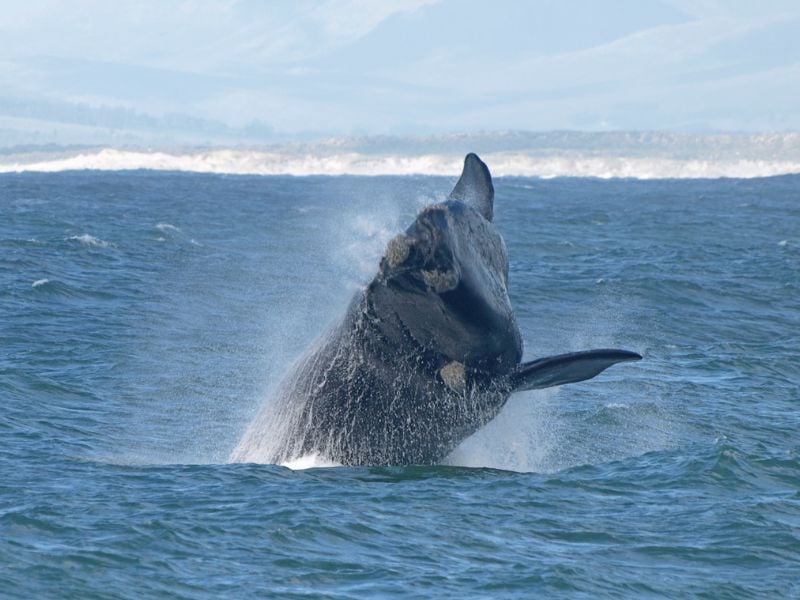
If you do only one thing in October, then go on a whale watching tour. It’s in the middle of the whale watching season and a perfect month to see whales and even orcas!
This is an incredible experience since you will be on a comfortable speedboat in an area with the highest concentration of whales on the South African Coastline.
Bonus (book via the calendar above): You will get picked up at your hotel in Cape Town!
Special October Tip: Safari / Game Viewing
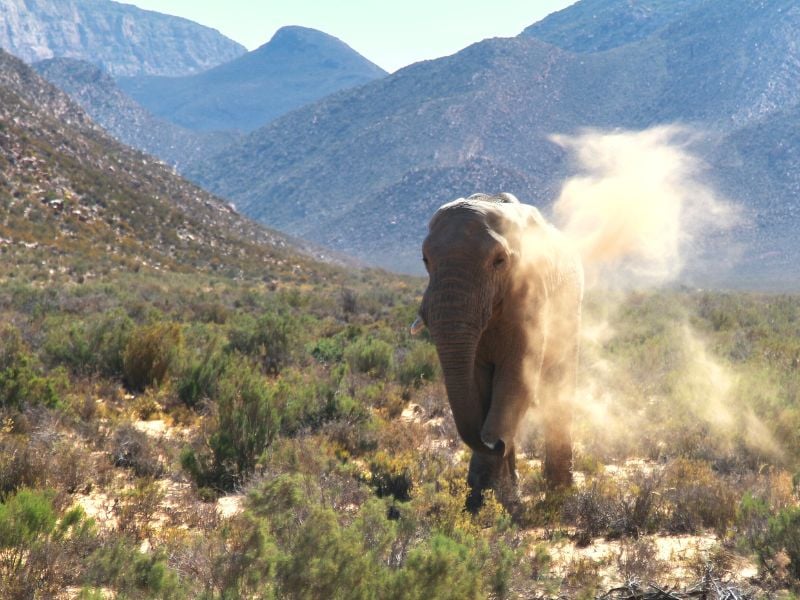
Why do it? The weather in South Africa’s bushveld game regions in October is hot and relatively dry, so the terrain roads are easy to get around. Varieties of thirsty animals still gather around scarce water sources, making them easy to spot, observe, and photograph.
In addition, the bush is still not too thick. As a result, the game is more visible, and it is mating season, a great time to witness courtship rituals and the return of migrating birds.
Good to know: The northern game parks are now getting a little toasty, summer rains are growing more frequent, and humidity levels are higher during the day. However, it’s really not a dealbreaker, and we highly recommend going now!
If you want an encounter with wildlife but prefer not to book one of the more extended tours, we recommend the 2-day safari (see the banner above).
October Weather
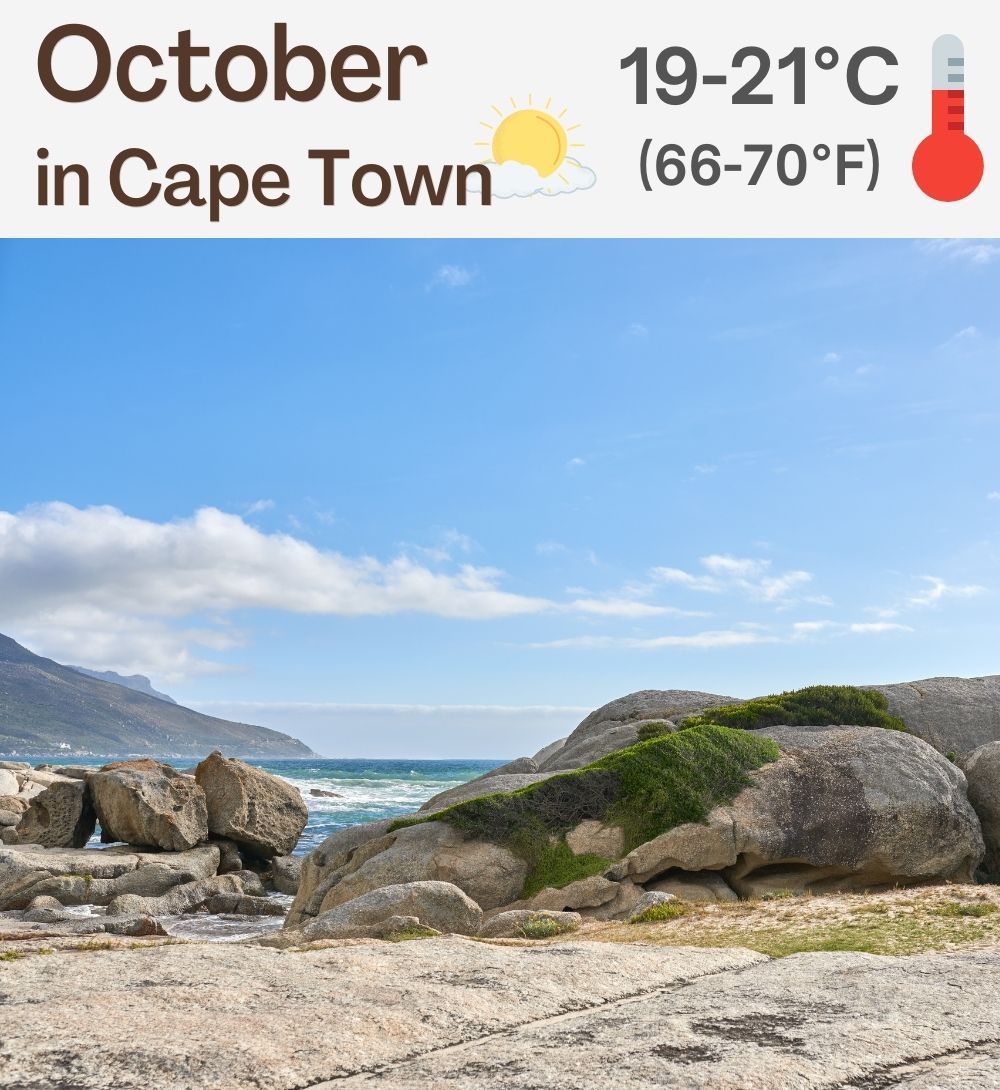
The weather in Cape Town in October is pleasantly warm and mostly dry. The average daytime high is around 21 °C (70°F). Temperatures seldom fall below 16°C (61°F) or exceed 26°C (79°F). It’s a few degrees colder at night. Daylight lasts over twelve hours.
Typical October highs:
- Early October: 19°C (66°F)
- Mid-October: 20°C (68°F)
- Late October: 21°C (70°F)
A typical daily temperature progression:
- Morning (8:30 AM): 15°C (59°F)
- Afternoon (2 PM): 21°C (70°F)
- Night (11:30 PM): 13°C (55°F)
Nights and early mornings are cool but comfortable enough to enjoy an early start or a late-night dinner and show.
Rain
The rainfall average in October is less than 25 mm (1 in).
October rainfall progression:
- 1 October: 27 mm (1.1 in)
- 11 October: 25 mm (1 in)
- 21 October: 22 mm(0.9 in)
- 31 October– 21 mm (0.8 in )
Wind
Southerly winds are prevalent during the month. However, with an average high of 12 mph (10.7 knots) for the month, winds will not influence your visit significantly.
What to Pack | What to Wear
In October, you wear light layers in Cape Town. The daytime is warm, and the early mornings and nights are cold to cool. You do not need to bring coats, gloves, or scarves for this time of year. For formal outings, you can get away with smart casual.
Most of what you need you can buy or hire in Cape Town. So don’t worry if you forget anything or need something special: binoculars, say, for whale watching, a hydration pack for hiking, a wet suit for snorkeling or diving.
- Make sure you pack:
- Comfortable long pants (jeans and smart casual)
- Bathing suit and shorts (definitely)
- Summer shirts
- sun hats, sunglasses, and sunscreen.
- A windbreaker
- Sweater
- Good walking shoes and sandals
- T-shirts
- Driver’s license.
- Particular interest articles (binoculars, climbing boots, etc.)
Crowds – How Busy Is It
Be prepared to encounter growing overseas tourist groups at popular sites such as the Table Mountain cable car and Kirstenbosch Gardens. Crowds do begin to build from about mid-October, but it is not until November that they become significant.
Flights and accommodation are still cheaper, especially if you book a month or two in advance.
Things To Do in / Places To Visit
Rocking The Daisies
Rocking the Daisies is a weekend rock music festival amongst the wildflowers at the Kloof Wine Estate. Hosted there every October, it is South Africa’s largest outdoor gathering and Cape Town’s trendiest event. Hundreds of acts perform on various stages, and the best local and international headliners are featured.
Kirstenbosch Botanical Gardens
The Kirstenbosch Gardens were established to conserve, research and display the country’s indigenous plants. For visitors, it is a vast tranquil and lovely garden. You can picnic on one of the lawns or explore the winding, tree-shaded paths through magnificent floral exhibits.
There are also two restaurants, an excellent memorabilia shop, and a plant museum.
Kirstenbosch is a beautiful place to visit no matter the time of year, but spring, i.e., September and October, is one of the prime times.
September is already great. However, we and other locals insist that the profusion of new blooms becomes even more spectacular through October.
Hillcrest Season of Sauvignon.
Hillcrest is one of many beautiful wine estates on the outskirts of Cape Town. Buy a picnic here and celebrate the sauvignon white wine season while enjoying the views across the quarry and neighbouring vineyards. You can also expect some musical entertainment.
After your time at Hillcrest, you may be tempted to explore the offerings of the other eleven estates on the area’s wine route.
Cape Town Kite Festival
At Africa’s largest kite festival, every shape and colour imaginable crowds the skies above the lakeside fields; gorgeous dragons, fishes, unicorns, and giant teddy bears stand out among bobbing, diving, flapping creations of all colours, shapes and sizes. If you visit Cape Town in October, this sight is too memorable to miss.
Franschhoek Art Festival
Traveling East, just over an hour from Cape Town, is the historic town of Franschhoek, known, along with its quaint beauty for its art galleries. In October each year, it hosts a festival showcasing the works of local and nationally known artists. As each year is different, you may want to check the program beforehand. Or you could take a chance.
A visit to Franschhoek is, in any case, something we highly recommend.
More Things to Do
Because greater Cape Town was formed by linking numerous small villages, each area has unique features. There is so much to discover wherever you go. It is impossible to describe all of it.
We focus on some of Cape Town’s main attractions and of course, the ones we love.
Table Mountain
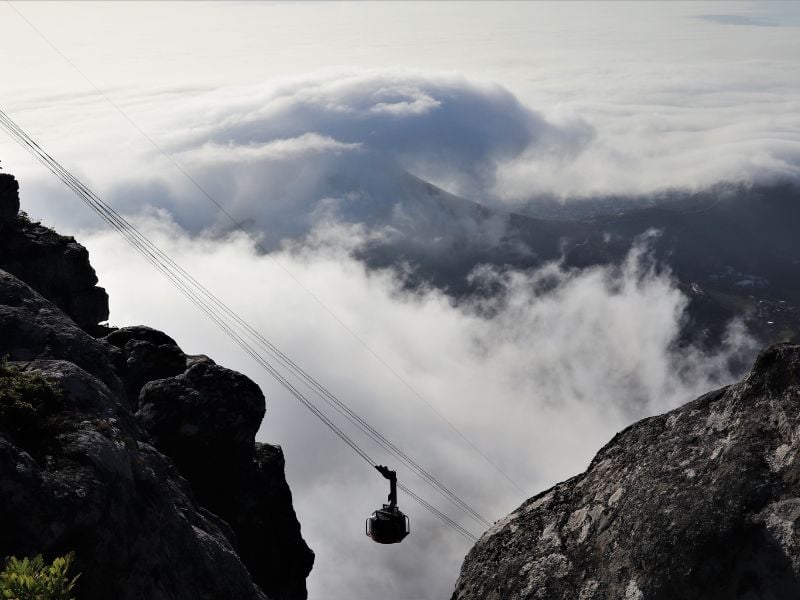
First on every visitor’s must-do list is a trip up Table Mountain.
One of the two revolving cable cars will ferry you over the steep slopes. When you reach the top, the city, sea, and coastline panorama take your breath away.
Those with more energy may prefer taking one of the many climbing trails. Here again, these range from leisurely walks to climbs requiring equipment.
Safari: 2-5 Days
As October is an incredible time for game viewing, we highly recommend considering a safari tour from Cape Town. If your time is limited, plan a 2-day tour. Otherwise, a four or 5-day tour makes the most of this inspiring experience.
Chapman’s Peak Drive
To get from Hout Bay to Noordhoek, you can drive one of the most thrilling marine passes in the world. Chapmans Peak Drive is cut out of a sheer mountain slope, high above an expansive bay. Expect heart-stopping drops, overhanging boulders, hairpin bends and a view to take your breath away.
Horse Riding at Noordhoek
Noordhoek is the nature-bound site of Long Beach, one of Cape Town’s wildest beaches. The best way to enjoy the shorelines’ white sands, wetlands, abundant birdlife, and ocean breakers is on horseback. You can hire horses from several stables for a unique opportunity to do something unforgettable.
Snorkelling or Scuba Diving
Snorkelling and diving in Cape Town’s waters are fabulous at any time.
Training for novices is easy to find. Attractions for seasoned divers include shipwrecks, diving with seals, shark-cage dives, and intriguing seaweed forest safaris.
A warning. The Atlantic side has icy currents. We were, thankfully, advised to hire 7mil wetsuits.
Mountain Trails
There are almost 400 mountain trails in and around Cape Town. They range from refreshing walks to challenging rock ascents. Locals insist they never grow tired of the wonder and exhilaration of the trails. If you stick to the few safety measures, dress in layers, and take water, hiking in Cape Town’s hills and mountains is a safe and uplifting experience
For the more extreme rock climbers, there are challenges to suit every level of experience and skill.
Bokaap (Lit. Above Cape).
In the 1700s, the Dutch East India Company shipped thousands of Islamic slaves from various colonies in the East to Cape Town. These enslaved people and their descendants became known collectively as the Cape Malays. After slavery was abolished around 1836, the freed people settled on a foothill above the city.
This settlement is the origin of Bokaap, home of the oldest Mosque in South Africa. Today, its citizens still take pride in their Islamic heritage. Cobbled streets, a distinguished history, unique Cape Malay cuisine and vividly colourful historic cottages make the Bokaap a place of fascination and delight.
Clifton Beaches
The suburb of Clifton is a cluster of high-end properties built on a steep mountainside, above and below the coastal road. On the shoreline below, hidden from the road, are four beautiful, secluded beaches. The Clifton beaches are adjacent, divided by natural boulder formations. The most sheltered beach, Fourth Beach, is the most popular for bathing and the only one where lifeguards are present.
Because the beaches face the Western sea horizon, they are sunny well into the summer evenings. So be ready to tan, enjoy beach games such as volleyball, build sandcastles, and savour sundowners. The sunsets are magical.
Camps Bay
A little farther along the same coastal road is Camps Bay, a trendy, chic suburb. Here, the road runs at beach level. One side is lined with fashionable restaurants, hotels and coffee shops. On the other side is the legendary Camps Bay beach, a broad swathe of white sands with a large children’s rock pool at one end. In addition, there is the late evening light, out-of-this-world ocean sunsets and a view of the soaring twelve apostle mountains. There’s also a modern theatre. Easy to see why Camps Bay is the glamour spot of Cape Town.
Muizenberg, Kalk Bay and Simonstown
On the other side of the mountain is the False Bay coastline, with its different but unmistakable appeal. More shabby chic than glamorous, it is the world of surfers, coffee bars, fishermen and antique shops. Train tracks separate road and seashore, and each place has its own quaint railway station.
Muizenberg’s beach goes on for miles, and its colourful beach cabins are an iconic part of Cape Town’s seaside image.
Farther along, by road, rail or footpath, Kalk Bay is perhaps the seaside cultural centre. One side of the street is lined with antique, book, and bric-a-brac stores and a popular theatre that was once a church. The beachside has many casual restaurants and a significant drinking establishment attached to the station.
For us, the highlight was the busy Kalk Bay fishing harbour. Scores of colourful fishing boats are moored at the quays; others sail out or return with their catches.
There is a lot to take in. If you are tempted to stay the night, there is ample accommodation.
Simonstown is a naval village and the last stop on the railway line. There is a great deal of history here, visible in the era-layered architecture of its shops and homes. There is plenty of evidence, for instance, of the strategic defensive role it played during the 2nd world war.
A darker side of its past is the removal of thousands of people from Simonstown during apartheid because they were not white.
Boulders Beach
Beyond Simonstown lies Boulders Beach and the beautiful road to Cape Point.
For many locals, Boulders Beach is their favourite beach. For visitors like us, this natural penguin sanctuary was a once-in-a-lifetime experience. It is a natural cluster of inlets sheltered by massive granite rocks where over 3000 African penguins have made their home.
You can rub shoulders with these lovable birds while you picnic on tropical white sands, snorkel or swim in the sheltered water. You must buy an entrance ticket; the upside is that crowds are restricted, and your belongings are safe.
Cape Point Nature Reserve
After visiting the penguins, a magnificent coastal drive — 20 km (13 mi) of ocean and mountain views – takes you to Cape Point Nature Reserve.
For a small fee, you enter a world of pristinely preserved Cape biodiversity set amongst rugged hills and rocky shorelines. Cliffs towering up to 200 meters (650 ft) above the sea provide mesmerising ocean and coastal views. Visit for the day or, if you prefer, book into one of the area’s guest houses or hotels and stay for a few days.
Township Tours.
Townships are ghettos set aside, through former racial segregation laws, for black or coloured people. As a result, these areas were historically excluded from the tourism routes. This restriction, of course, is long gone.
Fast becoming a favourite outing for many, a township tour offers a profound opportunity to enjoy the warmth and hospitality of a South Africa that apartheid tried to hide from the world.
The Victoria and Alfred Waterfront
The Victoria & Alfred (V&A) Waterfront is Cape Town’s prime shopping, dining and entertainment hub. It was built on 103 hectares of the oldest working harbour in South Africa. A network of dockside warehouses turned into hundreds of modern retail outlets.
No visitor can resist exploring the mind-boggling variety of available goods, dining fare, entertainment and services.
At the same time, somehow, the harbour charm is preserved. You can watch ships docking as you sip your wine or coffee or observe the fishing boats delivering their catch. You can take one of the many boat tours on offer.
Two Oceans Aquarium
Adjacent to the Waterfront is the Two Oceans Aquarium, a modern showcase of over three thousand sea creatures in their simulated habitats. Mesmerising exhibits of Indian and Atlantic sharks, rays, fishes, turtles, seahorses, octopuses, eels, jellyfish and species found nowhere else make this an outing not to be missed.
San Rock Art
Travel northwards from Cape Town for two hours to see the rock art of the San people, the region’s original inhabitants. Among South Africa’s most significant cultural treasures, these paintings date back to the stone age. There setting takes you into a region of magnificent mountains and vast plains that will remind you of that ancient time.
MUSEUMS AND GALLERIES
As South Africa’s oldest city, Cape Town’s story spans eras of ancient hunter-gatherer peoples, European settlers, slavery, wars, and the anti-apartheid struggle that led to today’s new democracy. The city’s museums and galleries preserve glimpses into five centuries of compelling history.
Robben Island Museum
Robben Island is the well-known site of the apartheid-era prison that held Nelson Mandela for 28 years. Visitors from far and wide come to witness this symbolic monument to the struggle for democracy.
Visitors talk about the prison’s profound effect on them and the new knowledge they learn about the island’s past. Few knew before the tour that the island’s grim history reflects hundreds of sad years of isolation and oppression. Those exiled to its bleak shores have included the hopelessly sick, indigenous rebels, the mentally unsound and lepers.
From the sea crossing to the guided tour, a visit to Robben Island is an unforgettable, even haunting, experience.
The Cape Town Castle
Built in the 17th Century to house the military regiment and protect the Cape settlers, the castle is the oldest building in the country. Today, this much-visited inner-city feature houses military history exhibitions, art, and evocative artefacts. Today, it is a memorial to early Dutch settlement rather than an army base. However, a Cape guards regiment still uses it as a barracks for its personnel.
The Slave Lodge
Another historical building, the former Government House, is now known as the Slave Lodge. ‘Under the theme, ‘From human wrongs to human rights”, exhibits reflect the long history of slavery in South Africa. The Lodge also explores current human rights issues by hosting occasional temporary exhibitions.
District Six Museum
District Six Museum is housed where, in the 1970s, the Apartheid authorities removed over 60,000 people from their homes. The moving exhibitions commemorate the evicted peoples’ plight and subsequent decades of hardship.
In 2003, the Netherlands honoured the museum with a Prins Klaus award.
IZIKO (Lit. The Hearth)
IZIKO museums is a national heritage body. They operate 11 major museums, including the Slave Lodge, in Cape Town. All are housed in magnificent historic buildings, bringing the city’s natural and social heritage to life.
The Company Gardens
The Company Gardens, close to the city centre, provides more than a pleasant walk and significant museums and galleries flank it. Its flora and architectural features date back to the arrival of the first Dutch settlers when the garden provided fresh produce for ships en route to and from the Dutch East Indies.
The Zeitz Gallery
Situated on the V&A Waterfront, the Zeitz Museum of Contemporary Modern Art Africa (MOCAA) exhibits the work of artists from all over Africa and the African Diaspora. Housed in converted grain silos, it occasionally also hosts international exhibitions. Opened relatively recently, it has become a favourite for locals and visitors.
THEATRE
Now that the main COVID threat seems behind us, the theatre is live in Cape Town again. Apart from the three main theatres, Artscape, The Baxter, and Theatre on the Bay, Cape Town has an array of exciting smaller theatre venues.
SHOPPING
As with any modern city, Cape Town has an abundance of shops, department stores, shopping centres, malls, and megamalls.
The Victoria and Alfred Waterfront
The Victoria & Alfred (V&A) Waterfront is a network of old dockside warehouses turned into hundreds of modern retail outlets. The variety of choices makes it Cape Town’s most irresistible shopping, dining and entertainment hub.
The harbour still operates. While you dine, you can watch ships docking or fishing boats delivering their catch.
MARKETS
The many markets are well-documented in guidebooks and brochures, so you can explore your options.
Greenmarket Square
The most exciting daily market is the African market on Greenmarket Square in the city’s centre. You will find everything African there, from garments and carvings to drums, jewellery and masks. The sound of busking dancers and musicians, and the buzz from pavement cafes, will guide you to it.
TRANSPORT
You can get around the city centre on foot. If preferred, there are also bus, taxi, and Uber services. However, a car is your best option to get out and explore the full extent of this exquisite destination.
EATING
Dining options also abound. European, Asian, and American food are readily available.
However, Cape Town has its local delights. The unique taste of Cape Malay dishes is a favourite among locals and visitors. There are also a variety of mouthwatering African (not only South African) dishes and atmospheric restaurants to explore.