

Despite the cold weather, winter in the Lofoten Islands is one of our favorite times.
Because in winter, you witness the spectacular Northern Lights dancing in the almost endless night sky. You can also bask in the unique experience of the polar night.
Our three tips we cover in this guide:
- Know the winter weather
- Pack the right outfit (tips at the end of this article)
- Experience Polar Night and Northern Lights
Read our detailed tips for each of the three below.
Essential Resources/Hotel (Money Savers)
🎟️ Best Lofoten Tours | GetYourGuide
🏠 Top Hotel Deals in Lofoten Islands (Best Price)
Additional resources:
All of these links open in a new tab. They are incredibly useful for your Lofoten trip in winter.
From enchanting phenomena to snug cafes, saunas, and markets, here’s a comprehensive guide to Lofoten during winter to help you plan your trip.
Must-Do Activity | Our Tip in February
This is one must-do tour in February and early March: Experience Lofoten’s epic Trollfjord aboard a modern and comfortable catamaran!
Keep in mind that we cover the time from mid-November until mid-March (we know, winter is technically from December to February, but we thought it’s a good idea to cover the coldest time of late fall and early spring as well).
First, our overview of the coldest time in Lofoten Islands (you will find detailed weather and outfit/packing tips later):
Winter Overview
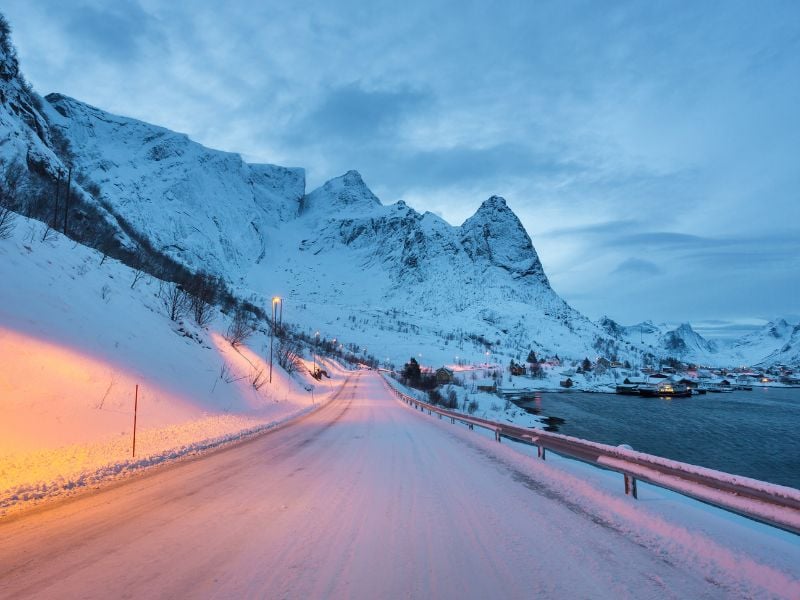
- Weather: It’s cold – but not unbearable (average lows around -5°C, average high 2°C). Unpredictable in November/December with either rain or snow. January – March provide more predictable winter conditions.
- Crowds: Quiet season, but February and March became slightly more popular recently.
- Highlights: Polar Night (24 hours of darkness) from December 9 – January 4 and Northern Lights (Aurora Borealis) throughout the winter. Fishing: Historical seasonal cod fishing in February/March.
For many, the quintessential landscape of Lofoten is a wintery one, with white-capped mountains and regular snowfall. However, in November and December, the weather is usually very unsteady.
Besides snow, a lot of rain is also possible during both months. That’s why those who seek this famous winter wonderland view, should visit between mid-January and March when there is less rain and more snow.
However, keep in mind that even in February, it may rain for a full week. By mid-January, the days are also slightly longer, with the sun at least peering over the horizon for a few hours each day to give you some exploring time. You should still expect long periods of darkness, however.
But the lack of light is usually worth it: Because at night, you may see the Northern Lights (possible during the whole winter season).
In March, you can expect the sun to hang around for long enough to make wintery adventure activities a possibility in Lofoten Islands. For those who seek fun in the snow, March is a great time to enjoy things like skiing and snowboarding, all against Lofoten’s stunning backdrop.
Lofoten’s ski slopes cater to all ages and abilities, and the resorts are beautiful to see even if you aren’t quite ready to brave the slopes.
Northern Lights
The natural phenomenon of the Northern Lights, also known as aurora borealis, can be observed in the winter skies over Lofoten. The Lofoten Islands have several hotspots that offer the best views of the Northern Lights.
If you have limited time only, we highly suggest that you take a guided tour or hire a guide to witness this breathtaking spectacle.
Your guide will take you to remote areas with dark skies where you can witness the Northern Lights at their best. Guides have access to all the necessary information to determine whether the Northern Lights will occur at any given location.
However, if you have more time to spare, you are likely to witness this natural wonder during your stay on a clear night.
Polar Night
Of course, this all assumes that you want some time in the daylight during your visit. There are many arguments in favor of visiting during the Polar Night (December 9 – January 4), where the sun does not rise at all.
For those who have never experienced this phenomenon, it is a unique experience that is an attraction in itself. Plus, the pitch-black conditions mean that this is a great time to seek out the elusive Northern Lights in Lofoten, which are jaw-dropping in their beauty.
Tourist Crowds
Tourism is usually at its lowest in November, so if you wish to experience a bit of peace and quiet in the striking environment, this may suit you well. Many tourists avoid this time as it does tend to be quite rainy and dark, but for others, this only adds to the atmosphere. T
he chance to miss the crowds makes it an appealing time to visit Lofoten as you will have plenty of time and space to really embrace all it has to offer.
Activities

The main ski season is February – April. If you’re not into winter sports, it’s the perfect time for visiting those small but very unique museums. You definitely need a car to get around. Taking photos along E10 and exploring the must-see places.
The best time to photograph the Northern Lights with snow-covered mountains as a backdrop is from mid-January until late March.
While the warmer months are perfect for hiking, winter is definitely not. Darkness, rain, and snow make a hike on your own very difficult and even dangerous.
In general, November and December are probably the worst month for longer outdoor activities, as it’s usually very rainy, windy, and icy. A traditional and memorable activity is the famous historical cod fishing every winter in February and March.
Roads
Road conditions depend on the weather and you need to drive carefully in the winter. However roads are cleared on a regular basis and are usually open to traffic and drivable. Experienced Lofoten visitors and locals say a 4×4 is not necessary if you stay on the main roads.
Eating
Some restaurants are closed in the winter. However, in towns like Svolvær or Leknes, you’ll have no problem finding open restaurants, even in deep winter. Shops are usually open regardless of whether they’re in ‘smaller’ or bigger town. This means that self-catering is an option in small towns.
Monthly Weather Details
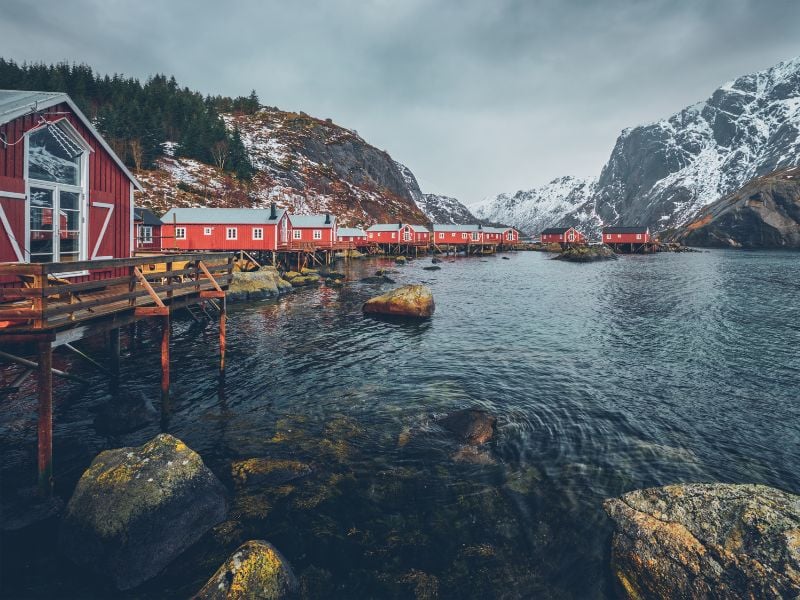
For us, Lofoten’s winter months, ranging from mid-November to mid-March, offer unique scenic beauty and the mesmerizing Northern Lights. But what about the weather?
Well, let’s dig in and see what each month has in store for you.
| Month | Average High Temperature | Average Low Temperature |
|---|---|---|
| Late November | 3°C (37°F) | -1°C (30°F) |
| December | 1°C (34°F) | -3°C (27°F) |
| January | 0°C (32°F) | -4°C (25°F) |
| February | 0°C (32°F) | -4°C (25°F) |
| Mid-March | 2°C (36°F) | -2°C (28°F) |
Mid-November to End of November
- Average High Temperature: Around 3°C (37°F)
- Average Low Temperature: Around -1°C (30°F)
The winter season starts to set in during mid-November. The daytime temperatures usually hover around the freezing point, making it quite chilly but manageable with proper winter gear.
Snowfall becomes increasingly common towards the end of the month, making the landscapes turn into a white wonderland. It’s also a wet period, with rain more common in the coastal areas. Yep, you’ll need those waterproof boots!
December
- Average High Temperature: 1°C (34°F)
- Average Low Temperature: -3°C (27°F)
December sees more consistent snowfall, covering the islands in a thick blanket of white. The temperatures dip further, making it essential to bundle up when you’re outdoors.
On the bright side, this is one of the best months to view the Northern Lights. The days are extremely short, with just a few hours of daylight, so plan accordingly.
January
- Average High Temperature: 0°C (32°F)
- Average Low Temperature: -4°C (25°F)
January is usually the coldest month, with temperatures often dipping below freezing. It’s advisable to wear multiple layers to keep warm, especially during the night. Snowfall is frequent, and the winds can make it feel colder than it actually is.
So, make sure you’re prepared for that. Skiing and snowboarding become popular activities during this time.
February
- Average High Temperature: 0°C (32°F)
- Average Low Temperature: -4°C (25°F)
Much like January, February continues to be cold with similar temperature ranges. Snowfall remains consistent, and the landscapes are breathtaking.
The good news? Days start to get longer, allowing for more outdoor activities. It’s a great month for snow sports and photography.
Early/Mid-March
- Average High Temperature: 2°C (36°F)
- Average Low Temperature: -2°C (28°F)
By mid-March, the winter season starts to wind down. The temperatures begin to rise slightly, and there’s a mix of snow and rain. It’s a transitional period as Lofoten prepares for the arrival of spring. But hey, don’t be fooled, it’s still pretty chilly out there.
Outfit Tips/Packing Guide

Properly preparing for a trip to the Lofoten Islands during the winter months is crucial. The islands offer a host of wonders from mid-November to mid-March, but the conditions can be challenging.
Buy Winter Down Jackets on Amazon [Essential for Lofoten in Winter]
Your experience will be as good as the clothes you wear, so let’s delve into the best outfit tips for each month and create a basic packing list.
Buy Thermal Underwear on Amazon [Also essential for Lofoten in Winter]
Outfit Tips for Mid-November to End of November
- Layer Up: Start with a moisture-wicking T-shirt and add a long-sleeved thermal on top. This should keep you warm and dry.
- Jacket: Opt for a windproof, water-resistant down jacket that will keep you warm and also protect against rain.
- Bottoms: A good pair of jeans should suffice. If you’re planning to be outdoors for an extended period, consider water-resistant trousers.
- Footwear: A sturdy pair of hiking trainers or boots with a good grip is a must.
- Extras: Carry a waterproof hat and gloves to keep your extremities warm.
Outfit Tips for December
- Thermal Layers: This is the time to bring out the thermal leggings or tights, along with your thermal tops.
- Jacket: Your down jacket will come in handy, but make sure it’s a heavy-duty one.
- Bottoms: Consider insulated, waterproof trousers for outdoor activities.
- Footwear: Boots with insulated lining will provide added warmth.
- Extras: Thermal socks and a balaclava can provide that extra layer of protection against the cold.
Outfit Tips for January
- Thermal Layers: Stick with your thermal tights and long-sleeved thermals. They’re your best friends this month.
- Jacket: Continue with your heavy-duty down jacket.
- Bottoms: Insulated and waterproof trousers are non-negotiable.
- Footwear: Insulated, waterproof boots are essential. Make sure they have excellent grip.
- Extras: Opt for thermal gloves and perhaps even glove liners for added warmth.
Outfit Tips for February
- Thermal Layers: Continue with thermal layers, and maybe add an extra fleece layer if you’re going to be active outdoors.
- Jacket: Your heavy-duty down jacket is still the best choice.
- Bottoms: Stick with insulated, waterproof trousers.
- Footwear: Insulated, waterproof boots remain essential.
- Extras: Neck gaiters or scarves can provide extra warmth and wind protection.
Outfit Tips for Early to Mid-March
- Layer Up: You might be able to skip the thermal leggings, but keep the long-sleeved thermals.
- Jacket: A medium-weight, windproof, water-resistant down jacket should be adequate.
- Bottoms: Water-resistant trousers should suffice.
- Footwear: Hiking trainers or boots with good grip should be fine.
- Extras: Keep the hat and gloves handy, especially for the evenings.
Basic Winter Packing List
- T-shirts (moisture-wicking): 3-4
- Long-sleeved thermals: 2-3
- Thermal leggings or tights: 1-2
- Jeans or casual trousers: 1-2
- Waterproof, insulated trousers: 1-2
- Windproof, water-resistant down jacket: 1
- Fleece jacket or pullover: 1
- Waterproof hat and gloves: 1 set each
- Sturdy hiking trainers or boots: 1 pair
- Thermal socks: 3-4 pairs
Sophia says:
We visited in December and really appreciated the tips on layering and thermal wear. The heavy-duty down jacket was a lifesaver, and the insulated boots made walking through the snow comfortable.
Alex says:
I took a trip to Lofoten in February. The thermal gloves and layers kept me warm during my outdoor adventures. The waterproof trousers were super helpful when we went snowboarding.
The Williams Family says:
We followed this guide for our mid-March trip and it worked perfectly. The medium-weight jackets were adequate, and we’re so glad we had waterproof trousers for the kids. The weather was variable, so layering was key.
In summary, being well-prepared for the Lofoten Islands in winter is critical for a cozy and memorable experience. From choosing the right layers to ensuring your jacket and trousers can withstand the elements, these outfit tips and packing list are designed to make your trip as comfortable as possible. Happy travels!